

PVC Wall Panels: Benefits & Applications for Bathrooms, Kitchens & Commercial Spaces
Quick Summary: PVC wall cladding panels offer a waterproof, hygienic, and easy-clean alternative to tiles and painted plasterboard — at a lower cost and with faster installation. This guide covers the key benefits, how PVC panels compare to tiles, and a detailed breakdown of the best applications from bathrooms and kitchens to food processing facilities and animal housing.
White PVC wall panels — also sold as hygienic wall cladding, plastic wall panels, or PVC sheeting for walls — have become the go-to wall finish for anyone who needs a surface that is genuinely waterproof, resistant to mould, and quick to clean. In Ireland, they are increasingly used not just in commercial and agricultural settings, but in domestic bathrooms and kitchens as a modern, low-maintenance alternative to tiling. This guide explains exactly what makes them worth considering and which environments they suit best.
Contents
What Are PVC Wall Panels?
PVC wall panels (also called hygienic wall cladding, plastic wall cladding, or PVC wall sheets) are flat, rigid sheets made from PVCu (unplasticised polyvinyl chloride). They are typically 2.5mm thick, white, with a smooth gloss finish on one face. They are bonded or mechanically fixed directly to walls and ceilings using adhesive and a system of PVC trim profiles that lock the sheets in place and seal all edges.
We stock Trovidur® EC-Clad — a premium white PVC rigid cladding sheet manufactured by Röchling Industrial, available in two standard sheet sizes with a full range of matching trim profiles and accessories.
Key Benefits of PVC Wall Cladding
100% Waterproof
PVC is non-absorbent — it does not absorb water, swell, or delaminate. There are no grout lines to deteriorate, no sealant joints to crack, and no risk of water penetration behind the surface. This makes it genuinely suitable for wet rooms, shower enclosures, and areas subject to steam and condensation.
Mould-Proof Surface
Mould grows in grout lines, on damp plasterboard, and behind poorly sealed tile edges. PVC cladding eliminates all of these. The smooth, non-porous surface gives mould spores nowhere to take hold, making it the preferred choice for bathrooms and kitchens in older Irish homes where damp is a persistent issue.
Hygienic & Easy to Clean
The smooth, continuous gloss surface wipes clean with warm water and a cloth. There are no grout lines to scrub, no porous surfaces to harbour bacteria, and no textured areas to trap grime. Standard disinfectants and cleaning agents can be used — essential for food preparation areas and healthcare environments.
Faster & Cheaper than Tiling
A full bathroom wall in PVC cladding can be installed in a few hours by a competent DIYer. Tiling the same wall takes far longer, requires specialist skills and tools, and involves multiple trades, adhesive drying times, and grouting. PVC panels are also significantly cheaper per square metre than most ceramic or porcelain tiles when you include installation costs.
Chemical Resistant
Trovidur EC-Clad resists dilute acids, alkalis, alcohols, cleaning agents, and disinfectants without surface degradation. It will not corrode, rust, or rot. This makes it suitable for use in environments where walls are regularly cleaned with industrial-grade products — dairies, food factories, laboratories, and veterinary surgeries.
Durable Long-Term
The hard gloss finish resists scratching, impact, and daily wear. PVC cladding installations in commercial and agricultural environments regularly exceed 15–20 years of service with minimal maintenance — far longer than painted plasterboard and comparable to tiling without any of the ongoing maintenance grout requires.
Bonds Over Existing Surfaces
PVC cladding can be adhered directly over old tiles, plasterboard, brick, blockwork, and render — avoiding the cost and disruption of stripping a wall back to bare substrate. This makes it an ideal refurbishment solution for bathrooms or commercial kitchens where removing tiles would be costly or destructive.
Wide Temperature Range
Suitable for use from -20°C to +60°C — making it appropriate for cold stores and chiller rooms at one end, and warm commercial kitchens at the other. Do not install near direct heat sources such as cookers or boilers where sustained temperatures exceed 60°C.
PVC Wall Panels vs Tiles: Which Is Better?
Tiles and PVC panels are the two most common choices for wet wall applications. Here is a direct comparison:
| Factor | PVC Wall Panels | Ceramic / Porcelain Tiles |
|---|---|---|
| Installation Time | Hours — panels slot into profiles and bond with adhesive | Days — tile adhesive, grouting, and drying time required |
| DIY Friendly | Yes — no specialist skills required | Challenging — cutting, adhesive setting, and grouting require experience |
| Mould Risk | Very low — no grout lines, non-porous surface | High — grout lines are the primary site of bathroom mould |
| Maintenance | Wipe clean — no scrubbing, no re-sealing | Grout requires regular cleaning; re-sealing needed over time |
| Cost | Lower overall — material and installation are both cheaper | Higher — material plus specialist installation labour |
| Appearance | Clean white gloss; no joints visible | Wide range of styles, patterns, and colours |
| Over Existing Surfaces | Yes — bonds directly over old tiles | Usually requires removal of old tiles first |
| Impact Resistance | Good — flexes slightly under impact rather than shattering | Brittle — tiles crack or chip under impact |
When tiles still win: If appearance and design variety are paramount — feature walls, statement bathroom designs, or heritage properties where a tile finish is expected — tiles remain the better aesthetic choice. PVC cladding excels where performance, hygiene, and ease of installation and maintenance take priority over visual design flexibility.
PVC Cladding for Bathrooms
PVC cladding for bathrooms and pvc cladding bathroom walls specifically are one of the fastest-growing alternatives to tiles in Irish home renovation. The reasons are practical: Irish bathrooms — particularly in older housing — suffer disproportionately from mould, damp, and deteriorating grout. White PVC cladding eliminates all three problems in one installation.
Shower Enclosures & Wet Rooms
PVC panels are fully waterproof and can be used directly in shower enclosures and wet rooms. When joints are sealed with silicone and all edges are captured in profiles, there is no path for water to reach the wall substrate. Many installers now specify PVC cladding as standard for new wet room builds.
Around Baths & Basins
The continuous, grout-free surface is particularly valuable around baths and basins where tile grout most commonly stains and moulds. A single PVC panel running from floor to ceiling eliminates the entire maintenance problem with no ongoing re-sealing required.
Refurbishment Over Old Tiles
If your bathroom has old tiles that are sound but discoloured or mouldy between the grout, PVC cladding can be bonded directly over them — avoiding the cost and mess of tile removal. This is the most common domestic installation method and typically takes a single day.
Ceilings
Bathroom ceilings are often the first place mould appears due to condensation. PVC cladding is equally suitable for ceilings — lightweight panels bond easily overhead and create a moisture-resistant surface that painted plasterboard simply cannot match.
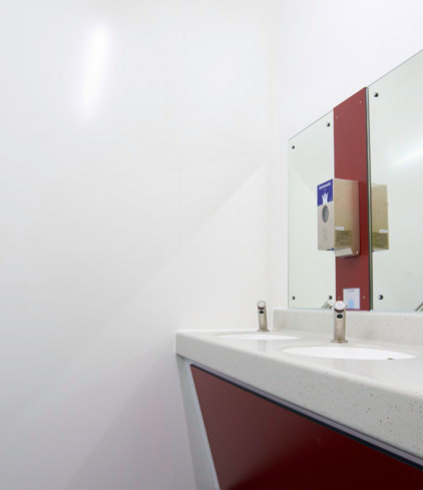
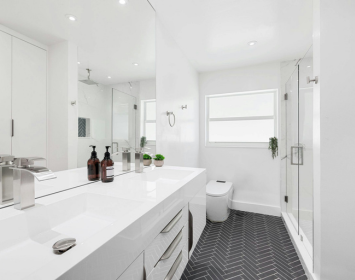
White PVC wall cladding in a bathroom — clean, grout-free, and waterproof
PVC Cladding for Kitchens
Kitchen walls — particularly behind hobs, sinks, and preparation areas — are exposed to grease, steam, and food splatter daily. PVC kitchen wall panels offer a practical solution that is easier to clean and more durable than most alternatives:
- Splashback areas behind hobs and sinks — the smooth surface wipes clean instantly; no grease trapping in tile joints
- Full wall cladding from worktop height to ceiling — creates a consistent, easy-clean surface throughout the kitchen
- Utility rooms and laundry rooms — high humidity and condensation are easily managed by PVC's non-absorbent surface
- Domestic installation note: Do not fit PVC panels immediately behind exposed hob burners or electric rings — the 60°C service temperature limit means direct radiant heat from a hob could cause distortion. Keep a 150mm minimum clearance from direct heat sources, or use a stainless steel splashback directly behind the hob with PVC cladding on adjacent walls.
Commercial & Food Industry Applications
Hygienic PVC wall cladding has been the standard wall finish in commercial food environments for decades. Its combination of chemical resistance, ease of cleaning, and non-toxic, food-safe properties makes it the specification of choice for food safety compliance:
Commercial Kitchens & Canteens
Meets HACCP hygiene requirements for food preparation walls. Withstands regular pressure washing and industrial cleaning agents. Typically used on all wall surfaces from floor to ceiling.
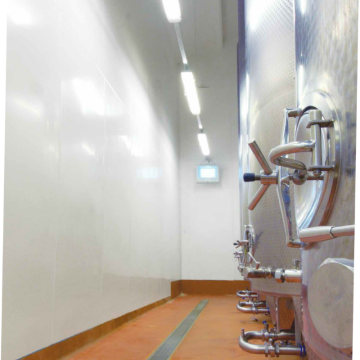
Food Processing Facilities
Resists the acids, alkalis, and cleaning chemicals used in food processing environments. Non-porous surface prevents bacterial harbouring. Easy to inspect and certify for food safety audits.
Cold Stores & Chiller Rooms
Rated to -20°C, making it suitable for walk-in cold rooms and freezer facilities. Will not deteriorate, delaminate, or absorb moisture at low temperatures unlike painted surfaces.
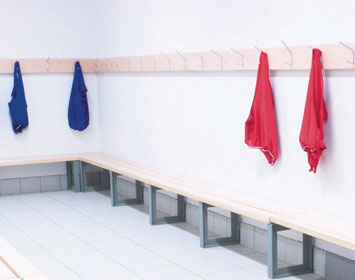
Changing Rooms & Leisure Facilities
High foot traffic, moisture, and frequent cleaning make PVC cladding the practical choice for sports clubs, gyms, and leisure centre changing rooms across Ireland.
Healthcare & Veterinary
Hospitals, surgeries, dental practices, and veterinary clinics specify PVC hygienic cladding for treatment room walls where infection control and regular chemical disinfection are requirements.
Industrial & Workshop Walls
Light-coloured, reflective white surface improves lighting levels in workshops and industrial spaces. The smooth surface resists oil, grease, and chemical splashes far better than painted concrete block.
Agricultural & Animal Housing
One of the largest markets for PVC exterior wall cladding in Ireland is agricultural buildings — particularly dairy parlours, milking units, calf houses, and pig and poultry units. The reasons are straightforward:
- Completely impervious to urine and dung — which would rapidly degrade painted blockwork or timber
- Pressure washable — can be cleaned with high-pressure washers and agricultural disinfectants between livestock cycles
- Does not harbour bacteria — critical for disease control and biosecurity on Irish farms
- Long service life — resists the wet, humid, ammonia-rich atmosphere of livestock housing without deterioration
- Bright white surface — improves light levels in animal housing, which has been shown to positively affect livestock welfare and productivity
Sizes & Specifications
We stock Trovidur® EC-Clad white rigid PVC cladding in two standard sheet sizes:
| Sheet Size | Thickness | Finish |
|---|---|---|
| 2440mm × 1220mm | 2.5mm | White Gloss |
| 3050mm × 1220mm | 2.5mm | White Gloss |
A full range of matching profiles and accessories is available including J-trim, H-trim, internal corner profiles, external corner profiles, and industrial strength adhesive.
Frequently Asked Questions
Q: Are PVC wall panels suitable for a bathroom?
A: Yes — PVC bathroom wall panels are fully waterproof, mould-resistant, and easy to clean. They are particularly well suited to shower enclosures, wet rooms, and the areas around baths and basins. They can be installed over existing tiles without removal, making them a popular bathroom refurbishment option in Ireland.
Q: Can PVC wall panels be used in a kitchen?
A: Yes, with one caveat: avoid positioning PVC panels immediately adjacent to direct heat sources (hob burners, grills). Keep a minimum of 150mm clearance from any direct heat source. For the remainder of kitchen walls — behind sinks, on splash-back areas, and on full-height walls — PVC cladding is an excellent, easy-clean alternative to tiling.
Q: Do PVC wall panels replace tiles completely?
A: They do in performance terms — waterproofing, hygiene, and durability are all comparable or better. The main difference is aesthetics: tiles offer far more design variety. PVC panels are white gloss, which suits most utility, commercial, and agricultural applications perfectly, and increasingly suits modern domestic bathrooms and kitchens too. If design variety is your priority, tiles may still be the better choice.
Q: Can I install PVC cladding over existing tiles?
A: Yes — this is one of the most common installation methods, particularly for bathroom refurbishments. As long as the existing tiles are firmly fixed, clean, and degreased, PVC cladding can be bonded directly over them using a polyurethane adhesive. This avoids the cost and mess of tile removal entirely.
Q: Is PVC cladding available in Ireland with fast delivery?
A: Yes — we stock Trovidur® EC-Clad white PVC rigid cladding sheets at our Ashbourne, Co. Meath warehouse with nationwide delivery across Ireland. Both standard sheet sizes (2440 x 1220mm and 3050 x 1220mm) are available online with all matching profiles and accessories.
Ready to Order PVC Wall Cladding?
We stock Trovidur® EC-Clad white PVC rigid cladding with nationwide delivery across Ireland. Browse sheets, profiles, and accessories online — or contact us for advice on your project.
Hygienic PVC Wall Cladding Sheets →
Cladding Profiles & Accessories →
How to Plan, Measure & Order PVC Wall Panels →
PVC cladding Ireland delivery available nationwide. Questions? Email [email protected] or call 01 801 0022
About This Guide: Product information is based on Trovidur® EC-Clad rigid PVC cladding supplied by Röchling Industrial and stocked by Access Plastics / 365plastics.ie. Temperature ratings and chemical resistance data are as specified by the manufacturer. Always consult the full technical data sheet for critical or specialist applications.