


Polycarbonate Roof for a Pergola, Lean-To or Patio: Complete Guide
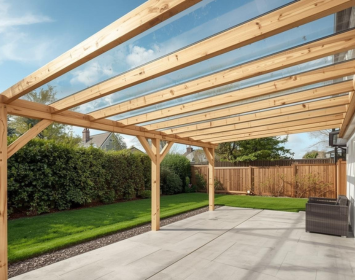
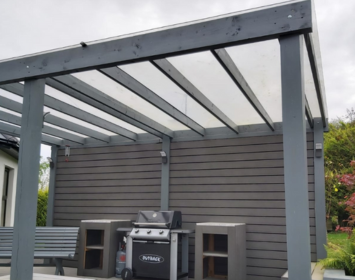
Multiwall polycarbonate is the most popular roofing material for pergolas, lean-tos, patios and side entrances in Ireland. It is lightweight, UV-stabilised, lets in natural light and holds up well to Irish weather. This guide covers everything you need to know to choose the right sheets, accessories and thickness for your project — whether you are roofing a lean-to, a freestanding pergola, or an apex structure.
Please note: we supply polycarbonate roofing sheets and all necessary accessories. We do not supply frames, rafters or structural components — these are sourced from a builder’s merchant or timber supplier. Once your frame is in place, everything you need to complete the roof is available from us.
Quick summary: what you need for a polycarbonate pergola roof
- Sheets: 10mm multiwall for standard pergolas, 16mm for larger spans or better insulation, 25mm for maximum performance
- Glazing bars: Capex 40 or 60 profiles, or aluminium F-profile — one per rafter
- Fixing buttons: every 400mm along intermediate rafters
- Edge sealing: sealing tape (top), breather tape (bottom)
- Flashing: butyl or lead flashing where roof meets house wall
- Silicone: low-modulus neutral cure only
Use our instant roof calculator to get a quote for your exact dimensions.
Table of Contents
Why choose polycarbonate for a pergola roof?
Polycarbonate has become the go-to roofing material for pergolas, lean-tos and covered patios in Ireland for several reasons. Compared to glass, it is far lighter and easier to handle, making it practical for DIY installation. Compared to opaque roofing materials, it lets in natural light — keeping your outdoor space bright even when covered.
Advantages
- Lightweight — easy to handle and cut
- UV-stabilised for long-term outdoor use
- Transmits natural light (up to 80%)
- Excellent thermal insulation (multiwall)
- Resistant to impact and Irish weather
- Available clear, opal or bronze tint
- Free cut-to-size service available
- Lifespan of 15–20 years with correct installation
Compared to alternatives
- vs glass: far lighter, no risk of shattering, easier to cut and install
- vs corrugated plastic: better insulation, cleaner appearance, stronger
- vs solid roofing felt/tiles: lets in light, much lighter, lower cost
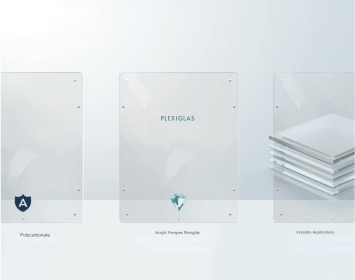
- vs Perspex/acrylic: more impact resistant, better for roofing applications
For a full comparison of polycarbonate against acrylic and Plexiglass, see our guide: Polycarbonate vs Perspex vs Plexiglass.
Lean-to, freestanding or apex — which roof type?
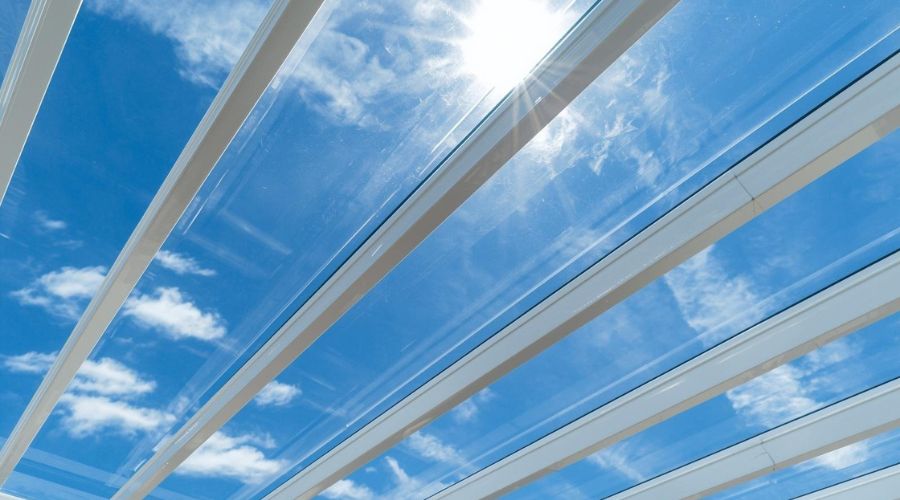
Our roof calculator covers all three common pergola roof configurations. Here is what each one means and the typical use cases in Ireland:
Lean-to
A single-pitch roof attached to a house wall on one side. The most common type in Ireland.
Typical uses: covered patios, side passages, carports, back garden lean-tos
Freestanding
A single-pitch roof supported on all sides by its own frame, not attached to the house.
Typical uses: garden pergolas, outdoor dining areas, freestanding carports
Apex
A double-pitch (ridge) roof with two slopes meeting at the centre. More complex but very attractive.
Typical uses: garden rooms, larger pergolas, summerhouses
The same polycarbonate sheets and accessories are used for all three configurations. The main difference is how you measure and how many sheets you need. Our roof calculator handles all three — just select your roof type, enter your dimensions, and get an instant quote.
We also offer DIY ready-to-go roof kits — pre-packaged sets of sheets and accessories calculated for standard sizes, including lean-to roofs, freestanding pergola roofs and side entrance roofs. If your dimensions match a standard kit, this is the fastest way to order.
Which sheet thickness do you need?
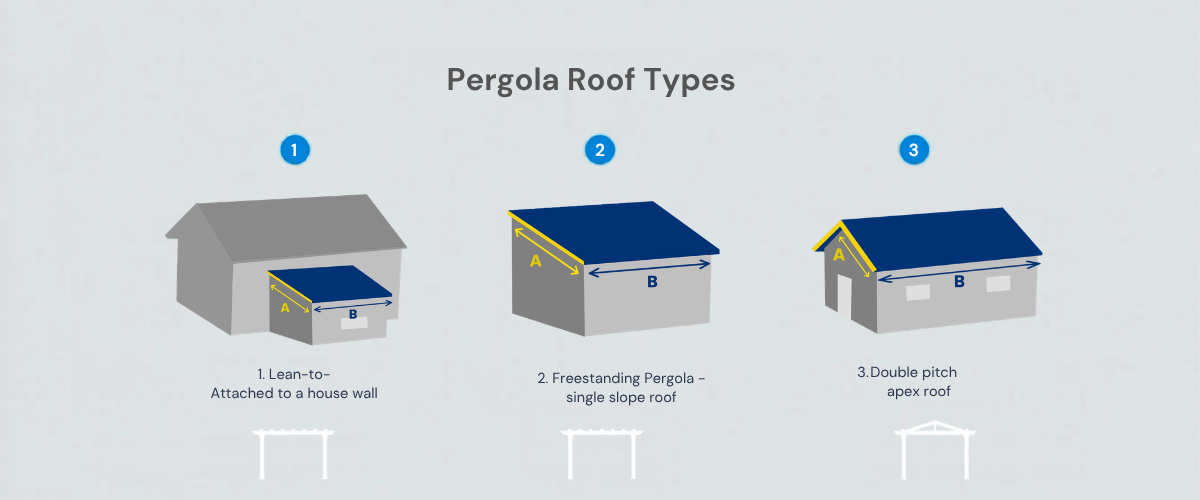
Choosing the right thickness is the most important decision for a pergola roof. Thicker sheets span greater distances between rafters, insulate better, and give the roof a more solid feel. For pergola roofing we supply 10mm, 16mm and 25mm multiwall polycarbonate.
10mm
Standard choice
- Most popular for pergolas and lean-tos
- Max rafter spacing 700mm
- Good light transmission
- Suitable for most residential projects
16mm
Recommended upgrade
- Better insulation and rigidity
- Max rafter spacing 1050mm
- Ideal for wider spans
- Good choice for exposed or coastal locations
25mm
Maximum performance
- Highest insulation value
- Max rafter spacing 1250mm
- Best for large structures
- Near-conservatory level performance
Important: we do not recommend 6mm multiwall polycarbonate for pergola or patio roofing. 6mm is designed for small areas and side entrance covers where span distances are minimal. For any open pergola or lean-to roof, 10mm is the minimum we recommend.
Clear, opal or bronze?
All three thicknesses are available in clear, opal white and bronze tint. Clear gives the most light transmission and the most visible sky. Opal diffuses light softly and reduces glare — popular for dining areas. Bronze tint reduces solar gain, making it a good choice for south-facing structures in summer. Our roof calculator lets you select your preferred colour when building your quote.
.png)
Accessories checklist
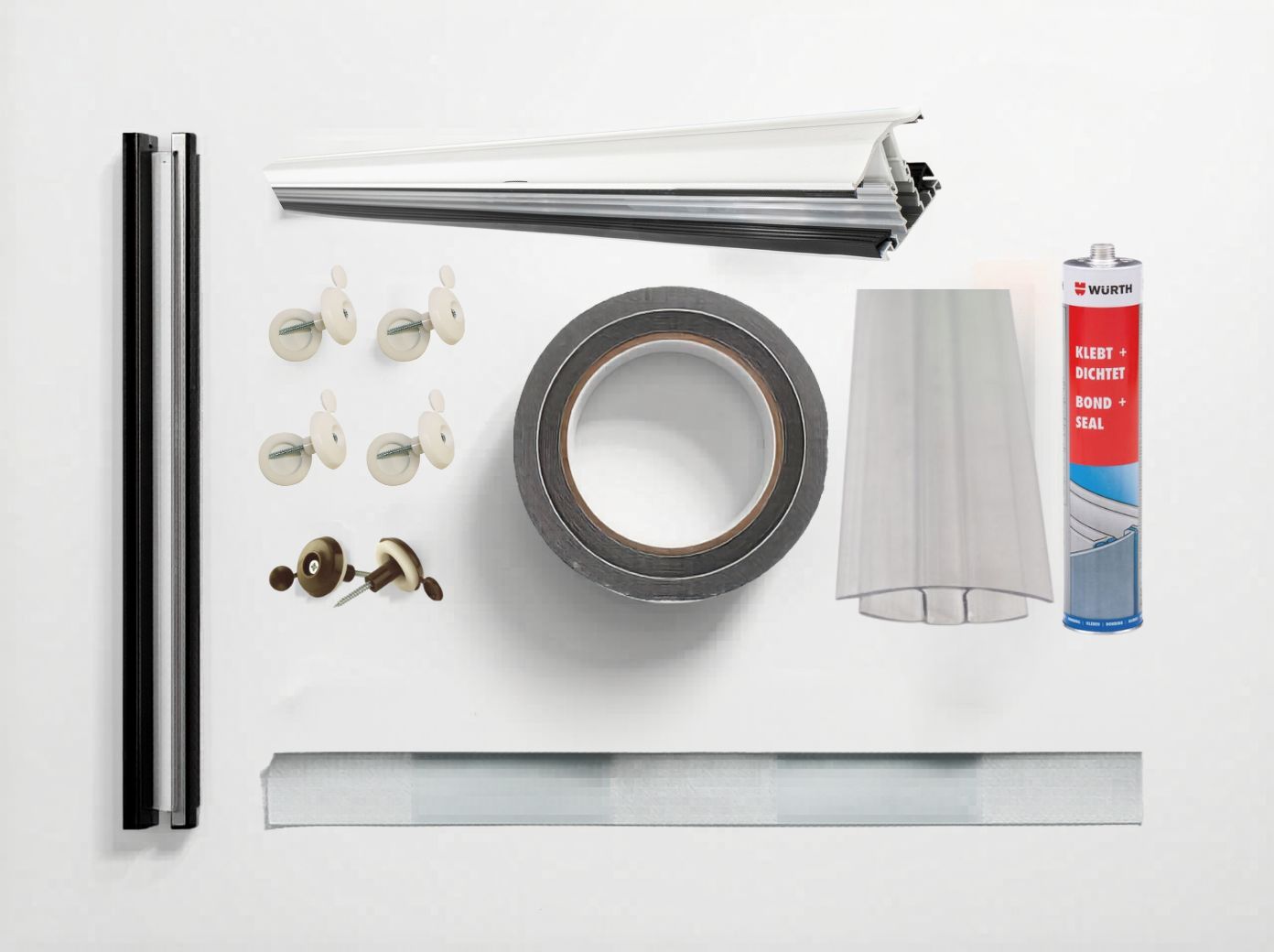
Along with your sheets, you will need a set of accessories to complete the roof correctly. Every item below is stocked and available from us. The roof calculator includes all accessories automatically when you build your quote.
Glazing bars and profiles
Fix over each rafter to hold sheets in place and create weathertight joints between sheets.
- Capex snap-down glazing bars — most popular, clean finish
- Aluminium F-profile — for eaves and edges
Fixing buttons
Secure sheets along intermediate rafters at 400mm intervals.
- Multiwall fixing buttons — come with roofing screws for timber. Use steel screws for steel rafters.
Edge sealing tapes
Applied to sheet edges before installation. Critical for preventing moisture and insects entering the channels.
- Aluminium sealing tape — for the top (ridge) edge
- Perforated breather tape — for the bottom (eaves) edge, allows condensation to drain
Flashing and silicone
For weatherproofing at walls and joints.
- Butyl flashing — where roof meets a house wall
- Neutral cure silicone — low-modulus neutral only. Do not use acrylic or standard silicone.
How to size and order your sheets
The simplest way to size and order is to use our instant roof calculator. Select your roof type (lean-to, freestanding or apex), enter your roof dimensions, choose your sheet thickness and colour, and the calculator will generate a complete quote for sheets and all accessories.
If you prefer to measure and order manually, here are the key rules:
Manual sizing rules
- Sheet length = run of the roof slope (from ridge to eaves), allowing for any required overhang
- Sheet width = distance between glazing bar centres. For the first and last sheet, deduct 5mm from the measured distance. For intermediate sheets, deduct 10mm to allow for thermal expansion.
- Sheets must join on rafters — never join sheets mid-span
- Minimum pitch: 5 degrees. Shallower than this and rainwater will not drain correctly.
- Flutes must run vertically — top to bottom with the slope, never side to side. This is essential for drainage and condensation management.
- UV side faces outward — the side with manufacturer’s writing must face the sky
We offer a free cut-to-size service on all multiwall polycarbonate sheets. Simply provide your exact dimensions when ordering and we will cut the sheets before dispatch — no on-site cutting required if you prefer. For guidance on cutting sheets yourself, see our guide: How to cut multiwall polycarbonate sheets.
Key installation tips
Full installation instructions are covered in our dedicated guide: How to install multiwall polycarbonate roofing sheets. The points below are the most important to get right on a pergola specifically.
Do
- Allow 10mm between sheets at each rafter for thermal expansion
- Apply sealing tape to the top edge and breather tape to the bottom edge of every sheet before fitting
- Use low-modulus neutral cure silicone at all joints and screw heads
- Keep protective film on sheets until the roof is complete
- Ensure glazing bars run the full length of each rafter without joins
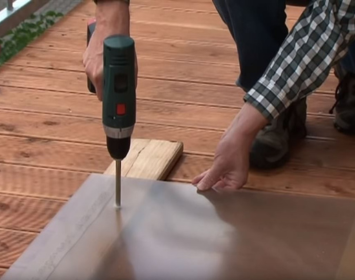
- Pre-drill oversized holes (18mm) when fixing through sheets directly
Avoid
- Running flutes side to side — water will not drain and channels will fill with condensation
- Installing sheets with the UV side facing inward — this causes yellowing and degradation within a few years
- Using standard or acrylic silicone — it attacks polycarbonate and causes crazing
- Fitting sheets too tightly with no expansion gap
- Removing protective film before the roof is fully complete
For a complete step-by-step walkthrough including rafter spacing, purlin fixing, tape application and finishing, see our full guide: How to Install Multiwall Polycarbonate Roofing Sheets.
Frequently Asked Questions
What thickness polycarbonate do I need for a pergola?
A minimum of 10mm for standard residential pergolas. If your rafter spacing exceeds 700mm, or if the structure is in an exposed location, 16mm is recommended. 25mm offers the best insulation and rigidity for large or commercial structures.
Do you supply the frame or rafters?
No — we supply roofing sheets and accessories only. Frames and rafters are available from builder’s merchants and timber suppliers. Once your frame is built, we supply everything needed to complete the roof.
Can I get an instant price for my pergola roof?
Yes — use our roof calculator. Select lean-to, freestanding or apex, enter your dimensions, choose your thickness and colour, and receive an instant itemised quote including all accessories.
Will you cut sheets to size?
Yes. We offer a free cut-to-size service on all multiwall polycarbonate sheets. Provide your exact dimensions when ordering and we cut before dispatch at no extra cost.
What is the minimum pitch for a polycarbonate pergola roof?
A minimum of 5 degrees is required. Less than this and rainwater will pool on the surface rather than draining off the eaves.
How long will a polycarbonate pergola roof last?
With correct installation, a multiwall polycarbonate roof will last 15–20 years. All sheets are UV-stabilised. The most common cause of early failure is incorrect installation — wrong silicone, no expansion gaps, or UV side fitted inward.
Is polycarbonate roofing suitable for Ireland’s climate?
Yes. Multiwall polycarbonate is UV-stabilised and designed to perform in temperature extremes, high rainfall and wind. It has been used in Ireland for pergolas, lean-tos and conservatories for decades and handles Irish weather conditions well.
Clear, opal or bronze — which is best for a pergola?
Clear gives maximum light. Opal diffuses light softly and reduces glare — popular for outdoor dining areas. Bronze tint reduces solar gain in summer — better for south-facing structures. All options are available in 10mm, 16mm and 25mm.
Ready to get a price for your pergola roof?
Use our instant calculator to build your quote in under 2 minutes — sheets and all accessories included. Or call us and we will work it out with you.
Related guides
How to install multiwall polycarbonate roofing sheets
Step-by-step installation guide covering glazing bars, sealing, flashing and finishing.
Read guide →How to cut multiwall polycarbonate sheets
Tools, techniques and tips for cutting multiwall sheets cleanly without cracking.
Read guide →Why choose multiwall polycarbonate?
The benefits of multiwall polycarbonate and why it is the best choice for roofing projects.
Read guide →