



How to Cut Acrylic Sheet: Complete Guide to Cutting Perspex, Plexiglas & Plexiglass
Quick Summary: Cutting acrylic sheet — whether it's branded PLEXIGLAS®, Perspex, or generic plexiglass — is straightforward with the right tools and technique. This guide covers how to cut plexiglass and acrylic using all three main cutting methods (circular saw, jigsaw, and scribing knife), walks through 8 essential steps, and includes the official video guide below. Don't want to cut at all? We offer a free cut-to-size service on all orders.
Acrylic sheet goes by several names — PLEXIGLAS®, Perspex, plexiglass, or simply acrylic glass — but they all cut in much the same way. Unlike glass, acrylic can be cut with standard woodworking and metalworking tools, making it an accessible DIY material. The key is using the right blade or bit, the correct speed settings, and a steady guide to ensure clean, chip-free edges. Follow the steps below to achieve professional results on your first attempt.
Contents
- Acrylic, Perspex, Plexiglas, Plexiglass — What's the Difference?
- Which Cutting Method Should You Use?
- Tools & Materials You'll Need
- Video: How to Cut Acrylic Sheet
- 8-Step Cutting Guide
- How to Cut Thin Acrylic / Perspex Sheet (Scribing Method)
- Tips & Common Mistakes
- Skip Cutting Entirely — Order Cut to Size
- Frequently Asked Questions
Acrylic, Perspex, Plexiglas, Plexiglass — What's the Difference?
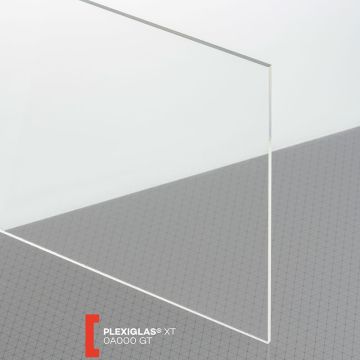
Before getting into cutting techniques, it helps to understand that these are all names for the same base material — polymethyl methacrylate (PMMA), commonly known as acrylic glass. They cut identically, so the guidance on this page applies to all of them:
PLEXIGLAS®
The original registered brand name, owned by Röhm GmbH (Germany). PLEXIGLAS® is a premium cast or extruded acrylic sheet known for excellent optical clarity and UV stability. The brand name is often written as "Plexiglas" (one 's') in reference to the material generally.
Perspex®
A UK/Irish brand name for cast acrylic sheet, manufactured by Perspex International. Widely used as a generic term in Ireland and the UK for any clear acrylic sheet. Same material, different brand. Browse our Perspex sheets.
Plexiglass (two s's)
The common American English spelling of the material. Used loosely to describe any clear acrylic sheet. Not a specific brand — just the generic US term for the same material as Perspex or PLEXIGLAS®.
Acrylic Sheet / Acrylic Glass
The generic material name — PMMA plastic in sheet form. Used by trade suppliers and manufacturers. "Acrylic glass" reflects its glass-like clarity; "acrylic sheet" its form. All the above are acrylic sheet.
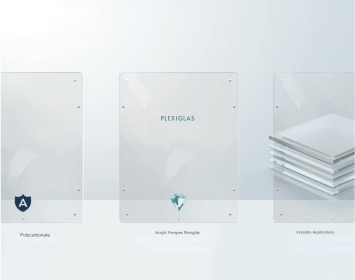
Note: This guide focuses on cutting acrylic / Perspex / PLEXIGLAS® sheet. If you need to cut polycarbonate sheet, the process is similar but polycarbonate is tougher and more flexible — it requires slightly different blade speeds and is better suited to jigsaws and routers than scoring-and-snapping.
Which Cutting Method Should You Use?
The best way to cut Perspex or acrylic sheet depends on the sheet thickness and the type of cut required. Use this quick reference:
Scribing Knife
Score-and-snap method. Fast and clean for straight cuts on thin sheets.
Best for: 2mm, 3mm acrylic sheet — straight lines only
Circular Hand Saw
Clean, fast, and very accurate with a guide track. Best for long straight cuts on medium to thick sheets.
Best for: 3mm–10mm acrylic, straight cuts, large sheets
Jigsaw
Versatile — handles curves, cutouts, and complex shapes. Slower than circular saw for long straight cuts.
Best for: Curves, angles, cutouts, 3mm–10mm sheets
Tools & Materials You'll Need
Standard woodworking or metalworking machines can be used for cutting PLEXIGLAS® and Perspex sheet. Here is the full list:
Cutting Tools (choose based on method)
- Circular hand saw with acrylic-appropriate blade
- Jigsaw with fine-tooth blade
- Scribing knife (for thin sheets up to 3mm)
- Manual router (for edge finishing)
Setup & Finishing
- Guide track / straight edge
- Screw clamps (to secure the sheet)
- Folding ruler or tape measure
- Permanent marker or grease pen
- Masking tape (if protective film has been removed)
- File, sandpaper, or draw blade (for deburring edges)
- Vacuum cleaner (to remove swarf during cutting)
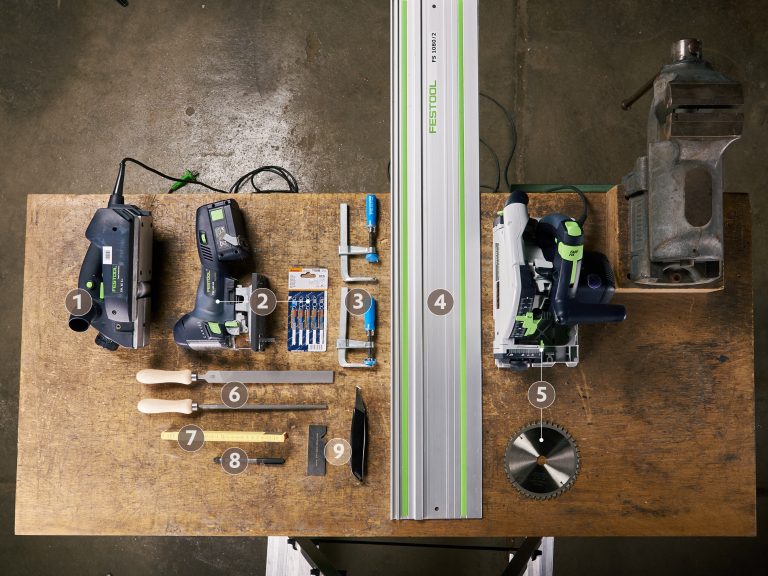
Tools needed for cutting acrylic / Perspex / PLEXIGLAS® sheet
Video: How to Cut Acrylic Sheet (Circular Saw, Jigsaw & Scribing Knife)
This official PLEXIGLAS® video demonstrates all three cutting methods — circular hand saw, jigsaw, and scribing knife — with guidance on blade selection, speed settings, and edge finishing. Watch through once before starting, then use the written steps below as your on-site reference.
Official PLEXIGLAS® cutting guide — circular saw, jigsaw & scribing knife techniques
8-Step Guide: How to Cut Perspex & Acrylic Sheet
Follow these steps for clean, accurate cuts on acrylic, Perspex, PLEXIGLAS®, or plexiglass sheet of any thickness.
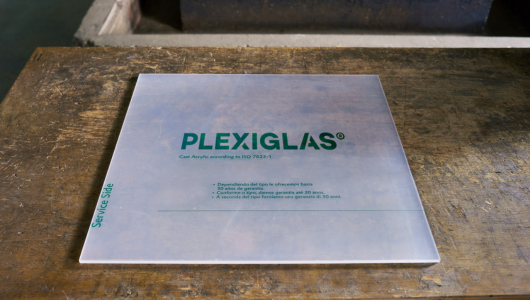
Leave the Masking Film On
All acrylic and Perspex sheets are supplied with a protective masking film on both faces. Leave this film in place throughout the entire cutting process — it protects the surface from scratches caused by the guide track, clamps, and your work surface. Only peel it off once all cutting and finishing work is complete.
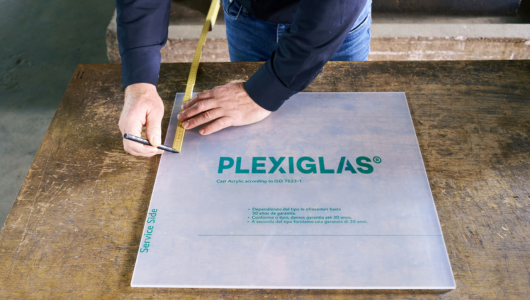
Draw the Cut Line
Measure and mark the cut line clearly on the masking film using a permanent marker or grease pen. A grease pen shows up clearly on both clear film and transparent sheet. Use a ruler or straight edge for accuracy — a misaligned line at this stage will produce a misaligned cut later.
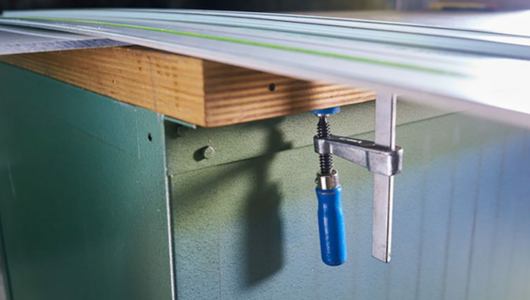
Secure the Sheet on a Level, Clean Base
Lay the sheet flat on a clean, level workbench or trestle. The section to be cut off should project slightly beyond the edge of the work surface so it can fall away freely. Secure the sheet firmly with screw clamps — an unsecured sheet will vibrate during cutting, causing chipping and inaccurate cuts. Check that the work surface itself is clean and free from grit or sharp debris that could scratch the underside.
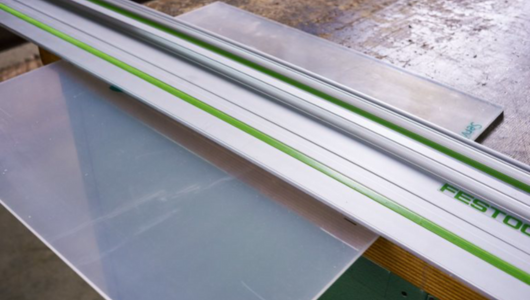
Use a Guide Track
For straight cuts, always clamp a guide track (or a straight piece of timber/aluminium) parallel to the marked line. Feed the saw base plate against this guide throughout the cut. Without a guide, even an experienced user will drift off line when cutting acrylic — the material's smooth surface gives the saw very little natural resistance to wandering.
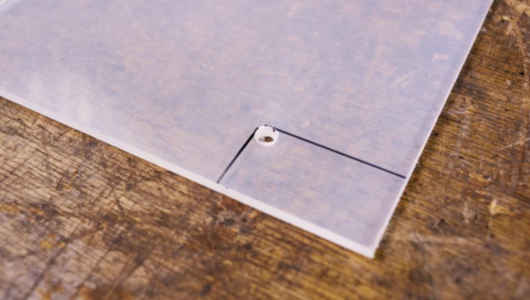
Drill a Hole at Internal Angle Intersections
If your cut involves an internal angle or a sharp corner (for example, cutting out a rectangular notch), drill a small hole at each corner intersection before sawing. This allows the saw blade to change direction without cracking the acrylic at the stress point. Use a sharp drill bit appropriate for plastics, at low speed.
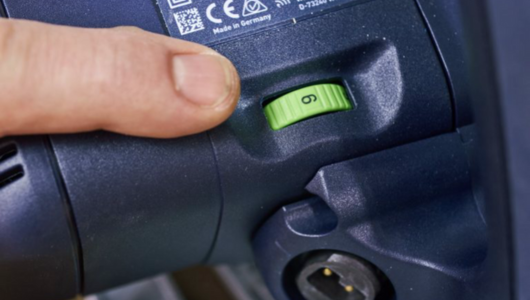
Set Rotational Speed and Feed Rate
Before cutting, set the saw speed and feed rate correctly — this is the step most DIYers skip, and it's the main cause of melted or chipped edges. Always test on a scrap piece first.
Speed guidance for acrylic / Perspex cutting:
- Too fast (high RPM + slow feed): Blade generates heat, melts and re-fuses the acrylic at the cut edge — visible as glassy incrustations or fusion beads
- Too slow (low RPM + fast feed): Blade snatches and chips the sheet edge
- Correct: Moderate, consistent RPM with a steady forward feed rate. The cut should produce fine, powdery swarf — not melted chips or large fragments
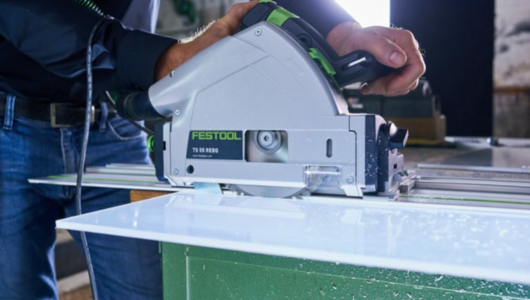
Saw Through the Sheet
Switch on the saw before bringing it into contact with the sheet — never start the blade in contact with the material. Feed the saw smoothly and steadily along the guide track, keeping light, consistent forward pressure. For circular saws, set the blade depth so it barely projects below the sheet surface; this minimises vibration and edge chipping. Use a vacuum or have an assistant clear swarf as you cut.
Deburr the Cut Edges
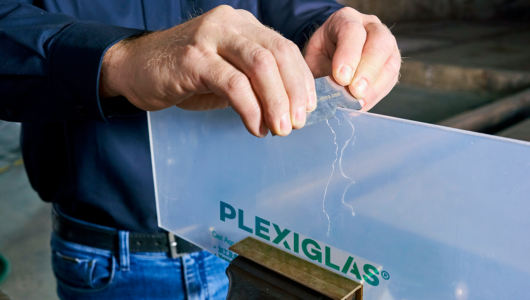
Freshly cut acrylic edges are sharp and may have fine burrs or saw marks. Smooth these with a fine file, medium-grit sandpaper, a draw blade, or a manual router. For a polished, glass-like edge, finish progressively through finer grades of sandpaper (120 → 240 → 400 → 800 grit). Secure the sheet in a vice with soft protective jaws so it cannot move or vibrate during finishing. Once done, peel the masking film and inspect your cut.
How to Cut Thin Acrylic / Perspex Sheet (Scribing & Snapping)
For 2mm and 3mm acrylic sheet, a scribing knife (or even a sharp Stanley knife) is often the fastest and cleanest cutting method — no power tools required. This is the best way to cut thin plexiglass at home without a saw.
- Leave the masking film on the sheet
- Mark the cut line with a permanent marker and straight edge
- Clamp a straight edge or guide firmly along the marked line
- Score the sheet deeply along the guide — draw the knife toward you with firm, even pressure. Repeat 5–8 times to create a deep groove
- Position the scored line over the edge of a workbench or a piece of timber
- Apply firm, even downward pressure on the overhanging section — the sheet will snap cleanly along the scored line
- Lightly sand or file the snapped edge to remove any roughness
Important: Scribing only works on straight cuts. For cutting plexiglas curves, cutouts, or sheets thicker than 3mm, use a jigsaw instead.
Tips & Common Mistakes When Cutting Perspex
✓ Do This
- Wear safety glasses and hearing protection
- Keep masking film on until all work is complete
- Always use a guide track for straight cuts
- Test blade and speed settings on a scrap offcut first
- Apply adhesive tape if the film has already been removed
- Keep the blade barely projecting below the sheet (circular saw)
- Deburr cut edges before handling — they are sharp
✗ Avoid This
- Starting the blade while in contact with the sheet
- Running at too high an RPM — causes melting and fusion
- Cutting without a guide — leads to wandering and cracking
- Peeling the film before cutting is finished
- Using a blunt blade — chipping and cracking result
- Cutting on an unclean surface with grit underneath
- Attempting to scribe-and-snap sheets thicker than 3mm
Skip Cutting Entirely — Order Acrylic Cut to Size
If you need simple square or rectangular cuts, the easiest option is to let us do it for you. We provide a free cut-to-size service on all PLEXIGLAS® and Perspex sheet orders — just enter your required dimensions at checkout (square and rectangle cuts). Your sheets arrive ready to fit, with clean factory edges that require no deburring.
Free Cut to Size Service
- Available on all acrylic / Perspex / PLEXIGLAS® sheet orders
- Square and rectangle cuts — enter dimensions at checkout
- No cutting tools, dust, or debris on-site
- Factory-clean edges delivered ready to use
- Nationwide delivery across Ireland
Frequently Asked Questions
Q: What is the best way to cut Perspex sheet?
A: For straight cuts on sheets up to 3mm, the scribing-and-snapping method is fast and clean — no power tools needed. For thicker sheets (4mm and above), a circular hand saw with a guide track gives the cleanest straight cut. A jigsaw is best for cutting plexiglass curves and cutouts. In all cases, leave the protective masking film on and use a guide for straight lines.
Q: Can I cut acrylic sheet with a Stanley knife?
A: Yes — for sheets up to 3mm thick. Score the line firmly and repeatedly with a sharp blade, then snap the sheet over a bench edge. A dedicated scribing knife gives a deeper, more controlled score than a standard Stanley knife, but a sharp Stanley blade works on 2mm sheet.
Q: What blade should I use to cut Plexiglas or acrylic?
A: Use a fine-tooth blade with a high tooth count — blades designed for cutting non-ferrous metals or melamine-faced board work well on acrylic. Avoid coarse wood-cutting blades which chip the sheet edge. Always test on a scrap piece at your intended speed setting before cutting your final sheet.
Q: Why is my cut edge melting or fusing?
A: Melted or fused edges are caused by too much heat at the cut — usually a combination of too high an RPM and too slow a feed rate. The blade spends too long in contact with each section of material and generates heat. The fix is to increase your feed rate (move the saw forward faster) and/or reduce blade RPM slightly. Test on a scrap offcut until you get fine, powdery swarf rather than melted chips.
Q: Is Perspex the same as plexiglass?
A: Yes — Perspex, plexiglass, PLEXIGLAS®, and acrylic sheet are all names for the same base material (PMMA plastic). Perspex is the UK/Irish brand name; plexiglass is the common American term; PLEXIGLAS® is the original German brand. They all cut, drill, and finish in exactly the same way.
Q: Can I get acrylic cut to size without cutting it myself?
A: Yes — we offer a free cut-to-size service on all acrylic sheet orders at 365plastics.ie. Simply enter your required dimensions (square and rectangle cuts) when placing your order. This is available on the full range of PLEXIGLAS® and Perspex acrylic sheets.
Ready to Order Your Acrylic Sheet?
We stock PLEXIGLAS® and Perspex acrylic sheet in 2mm, 3mm, 4mm, 6mm, and 10mm thicknesses, in clear, opal, and frosted finishes. Available in standard sheet sizes or cut to your exact dimensions — free of charge.
Shop our full range: Acrylic / Perspex Sheets — 365plastics.ie
About This Guide: Cutting instructions are based on the official PLEXIGLAS® machining guide and general best practices for working with cast and extruded acrylic sheet. Recommended speed settings for specific saw models are available in the PLEXIGLAS® Machining brochure from Röhm GmbH. Always test blade settings on an offcut before cutting your final sheet, and wear appropriate PPE including safety glasses and hearing protection.