









How to Cut Polycarbonate Sheet: Complete Sawing, Drilling & Fixing Guide
Quick Summary: Polycarbonate sheet can be cut using standard workshop equipment — circular saws, band saws, jigsaws, and milling machines all work well with the correct settings. This guide covers exact cutting parameters for each method, a full drilling specification, and fixing rules to avoid cracking. Applies to both solid and multiwall polycarbonate.
Polycarbonate sheet is one of the most workable plastic sheet materials available — it saws cleanly, drills without shattering, and machines on conventional equipment. However, using the wrong blade speed, feed rate, or drill settings produces melted edges, cracking, and stress damage that can compromise the finished installation. This guide gives you the exact parameters recommended for cutting solid polycarbonate sheets (Marlon FS/FSX and equivalents), plus the drilling and fixing rules that prevent notch-related failures in the field.
Contents
- Solid vs Multiwall: Does Cutting Differ?
- Which Tool Should You Use?
- Cutting Parameters: Circular Saw, Band Saw & Milling Machine
- Cutting Polycarbonate with a Jigsaw
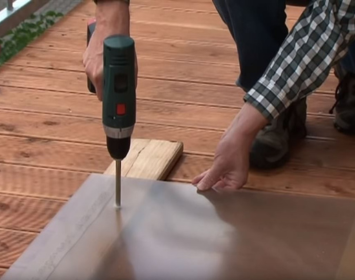
- Drilling Polycarbonate Sheet: Parameters & Rules
- Polycarbonate Sheet Fixing & Hole Sizing Guide
- Tips & Common Mistakes
- Frequently Asked Questions
Solid vs Multiwall Polycarbonate: Does Cutting Differ?
The cutting techniques described in this guide apply primarily to solid polycarbonate sheet. For multiwall polycarbonate, the same tools and broadly similar speed settings apply, but there are a few practical differences worth knowing before you start:
Solid Polycarbonate Sheet
- Dense, uniform structure throughout
- All saw and drill parameters in this guide apply directly
- Cut edges are solid — no open channels to seal
- Available 2mm–15mm thickness
- Notching is the primary failure risk — avoid sharp internal corners
Multiwall Polycarbonate Sheet
- Internal hollow channels run along the sheet length
- Cut ends expose open channels — always seal with end tape after cutting
- Use a fine-tooth jigsaw blade; circular saw works on thicker grades
- Available 4mm–35mm (twin, triple, and X-wall profiles)
- Cut perpendicular to channels where possible for cleaner edges
Which Tool Should You Use to Cut Polycarbonate Sheet?
The best tool for cutting polycarbonate depends on the type of cut required and the sheet thickness. All of the following work well with the correct blade and speed settings:
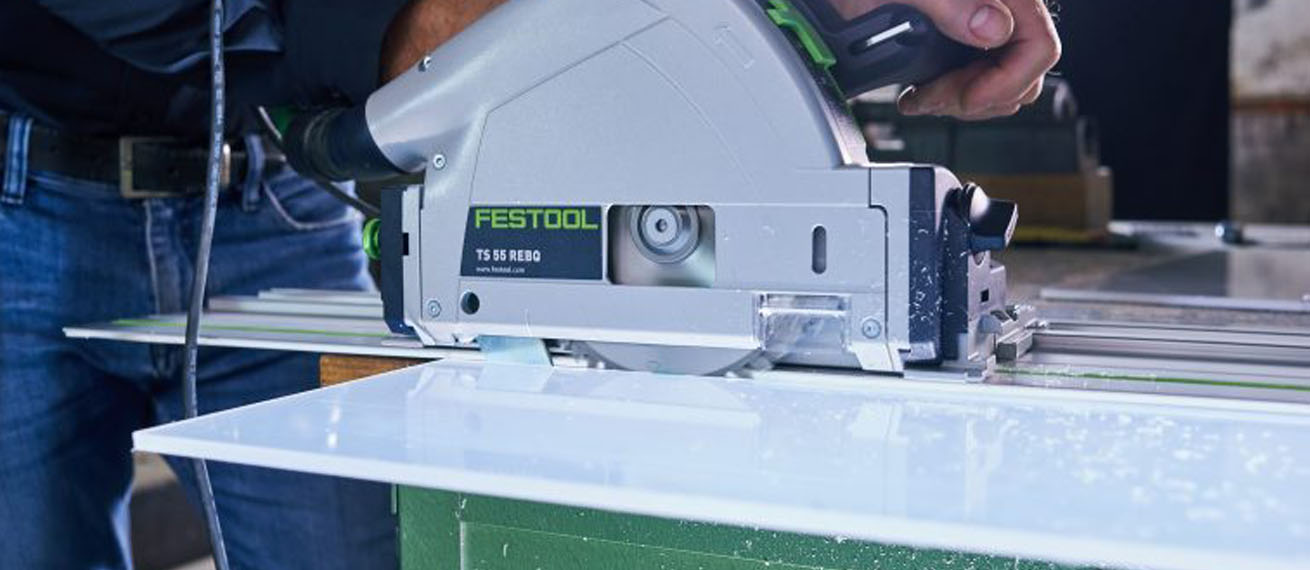
Circular Hand Saw
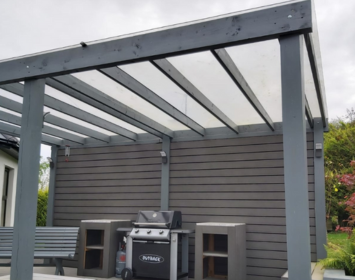
Fast and accurate for long straight cuts. Use with a guide track for best results. The go-to tool for cutting polycarbonate roof panels and large sheets to length.
Best for: Straight cuts, 3mm+ solid sheet, polycarbonate roof panels
Band Saw
Excellent for straight cuts and gentle curves on solid sheet. Lower cutting speed than circular saw — well-suited to workshop use. Consistent chip-free results.
Best for: Straight cuts and curves, workshop setting
Jigsaw
Most versatile option — handles curves, cutouts, and notches. The standard recommendation for cutting multiwall polycarbonate on-site. Use a fine-tooth blade.
Best for: Curves, cutouts, multiwall sheet, on-site work
Milling Machine / Router
Precise edge finishing and rebating. Use standard high-speed tools. Lower cutting speeds than metal — see the parameters table below.
Best for: Edge finishing, rebates, precision machining
Cutting Parameters: Circular Saw, Band Saw & Milling Machine
Polycarbonate sheet machines on conventional equipment with standard high-speed tools. The table below gives the recommended settings for each method. Using settings outside these ranges — particularly too high a cutting speed with too slow a feed — will cause heat build-up, resulting in melted edges or re-fusion of the cut surface.
| Parameter | Circular Saw | Band Saw | Milling Machine |
|---|---|---|---|
| Clearance Angle | 20 – 30° | 20 – 30° | 20 – 25° |
| Rake Angle | 15° | 0 – 5° | 0 – 5° |
| Cutting Speed | 1800 – 2400 m/min | 600 – 1000 m/min | 100 – 500 m/min |
| Feed Speed | 19 – 25 m/min | 19 – 25 m/min | 0.1 – 0.5 mm/rev |
| Tooth Spacing | 2 – 5 mm | 1.5 – 2.5 mm | — |
Important: Notches adversely affect the mechanical properties of polycarbonate sheet and should be avoided wherever possible. When making internal cuts or angles, drill a clearance hole at each corner intersection before sawing — this prevents stress concentration at the notch point.
Cutting Polycarbonate with a Jigsaw
A jigsaw is the most practical tool for cutting polycarbonate sheet on-site, particularly for multiwall panels. It handles curves, cutouts for skylights, and trimming panels around obstacles that a circular saw cannot reach. Follow these guidelines for clean, chip-free jigsaw cuts:
- Use a fine-tooth blade designed for plastic or non-ferrous metals (minimum 10 TPI)
- Set the jigsaw to a medium speed — not maximum. High speed generates heat and melts the cut edge
- Disable the pendulum action (set to 0) for cleaner cuts in polycarbonate
- Apply masking tape along the cut line to reduce surface chipping from the base plate
- Feed the saw at a steady, consistent rate — do not force or slow down excessively
- For curves, use a shorter, narrower blade which turns more easily in the material
- Always start the blade before it contacts the sheet — never plunge-start in contact with polycarbonate
- For multiwall sheet, cut parallel or perpendicular to the internal channels — diagonal cuts can cause the sheet to crack between channel walls
Drilling Polycarbonate Sheet: Parameters & Rules
Any commercially available metal drill without a specially ground bit is suitable for drilling polycarbonate sheet. The parameters below apply to standard twist drills used on a pillar drill or cordless drill at controlled speed.
| Parameter | Recommended Value |
|---|---|
| Clearance Angle | 5 – 8° |
| Tip Angle | 90 – 130° |
| Helix Angle | ca. 30° |
| Rake Angle | 3 – 5° |
| Feed Rate | 0.1 – 0.5 mm/rpm |
| Drill Tip Speed | 10 – 60 m/min |
Drilling Rules — Must Follow
✓ Do This
- Use a new drill not previously used on other materials
- Support the underside of the sheet to prevent breakout
- Keep drill speed within the recommended range
- Position holes at least 1.5 x hole diameter from the sheet edge
- Size the hole correctly for the fixing shank (see below)
✗ Avoid This
- Do not use cutting oils — they can stress-crack polycarbonate
- Do not countersink fixings — concentrates stress at the hole
- Avoid fixing threads in the sheet if any alternative exists
- Never drill too close to the sheet edge — breakout risk
- Do not overtighten fixings — causes cracking around the hole
Polycarbonate Sheet Polycarbonate Sheet Fixing & Hole Sizing Guide
Polycarbonate sheet expands and contracts significantly with temperature changes. Holes that are too tight for the fixing shank will prevent this thermal movement, creating stress at every fixing point — a common cause of cracking in installed polycarbonate roof panels. Follow these sizing rules:
Hole Diameter Rules
- For sheets up to 2m in length: hole diameter = fixing shank diameter + 6mm
- For every additional metre of sheet length beyond 2m: add a further 3mm to the hole diameter
- Example: 4m sheet with a 6mm fixing shank → 6 + 6 + (2 × 3) = 18mm hole diameter
Edge Distance: Every fixing hole must be positioned at least 1.5 times the hole diameter away from the sheet edge. Holes drilled too close to the edge will crack the sheet under thermal movement or wind loading.
Why Such Large Clearance Holes?
Polycarbonate has a thermal expansion coefficient of approximately 65 × 10⁻⁶ /°C — significantly higher than steel or timber. A 2m polycarbonate panel can expand or contract by several millimetres between a cold winter morning and a warm summer afternoon. If the fixing holes are tight around the screw shanks, this expansion is resisted and very high stress concentrations build up at each hole — eventually causing cracking. The oversized holes allow the sheet to float freely on its fixings. Always use large-diameter washers to distribute load across a wider surface area.
Tips & Common Mistakes When Cutting Polycarbonate
- Always wear safety glasses and hearing protection when sawing polycarbonate
- Leave the protective film on throughout all cutting, drilling, and handling — remove only at final installation
- Use a guide track for all straight cuts — polycarbonate's smooth surface gives the saw little natural resistance to wandering
- Always test your blade and settings on an offcut before cutting your final sheet — look for fine, powdery swarf as the sign of correct settings
- Melted or re-fused cut edges indicate too high an RPM or too slow a feed rate — increase feed speed or reduce RPM
- Chipped or cracked edges indicate too fast a feed or a coarse/blunt blade — reduce feed speed and replace the blade
- For multiwall polycarbonate, seal all cut ends immediately with aluminium tape (bottom edge) and breather tape (top edge) to prevent condensation and insect ingress
- If the protective film has been removed before cutting, apply masking tape along the cut line to prevent surface scratching from the guide and base plate
Frequently Asked Questions
Q: What is the best way to cut polycarbonate sheet?
A: For straight cuts on solid polycarbonate sheet, a circular hand saw with a guide track gives the cleanest result. For multiwall polycarbonate and on-site cutting, a jigsaw with a fine-tooth blade is the most practical option. In both cases, use the cutting speed and feed rate parameters in the table above — incorrect settings cause melted or chipped edges.
Q: Can I cut polycarbonate roof panels with a circular saw?
A: Yes — a circular saw is ideal for cutting polycarbonate roof panels to length, particularly solid sheet and thicker multiwall panels. Use a fine-tooth blade, set cutting speed to 1800–2400 m/min, feed at 19–25 m/min, and clamp a guide track alongside the cut line. Always start the blade before it contacts the sheet.
Q: Why are my cut edges melting or fusing?
A: Melted edges mean too much heat is being generated at the blade — the most common cause is too high an RPM combined with too slow a feed rate. The fix is to increase your forward feed speed and/or reduce blade RPM. Test on a scrap offcut: the correct result is fine, powdery white swarf, not melted chips.
Q: How big should the hole be when fixing polycarbonate sheet?
A: The hole diameter should be 6mm larger than the fixing shank diameter for sheets up to 2m long. For each additional metre of sheet length beyond 2m, add a further 3mm. This clearance accommodates thermal expansion and prevents stress cracking at the fixings. Always position holes at least 1.5 times the hole diameter from the sheet edge.
Q: Can I use cutting oil when drilling polycarbonate?
A: No — do not use cutting oils on polycarbonate. Many cutting fluids and oils will chemically attack polycarbonate, causing stress cracking (crazing) around the hole. Drill dry, at moderate speed within the recommended parameters. If heat is a concern, use brief pauses and allow the material to cool.
Q: Do I need to seal cut edges on multiwall polycarbonate?
A: Yes — always seal cut ends on multiwall polycarbonate immediately after cutting. Use aluminium tape on the bottom (drainage) edge and breather tape on the top edge. Unsealed channels allow moisture ingress, condensation build-up, algae growth, and insect entry — all of which reduce clarity and lifespan. Sealing tape is available in our accessories range.
Ready to Order Polycarbonate Sheet?
We stock solid and multiwall polycarbonate sheet in a full range of thicknesses and sizes, with nationwide delivery across Ireland. Available in clear, bronze, and opal finishes.
About This Guide: Cutting and drilling parameters are based on manufacturer recommendations for Marlon FS/FSX solid polycarbonate sheet (Brett Martin) and general best practices for machining polycarbonate. Specific settings may vary by sheet thickness, machine type, and blade condition — always test on an offcut before cutting your final material. For structural or load-bearing installations, consult a qualified engineer.